
Regenerative Medicine
What Is PRP (Platelet-Rich Plasma)? A Look at the Science Behind This Regenerative Treatment
Understand the science of how your body’s own healing properties are used to support joint health and what it could mean for your wellness journey.
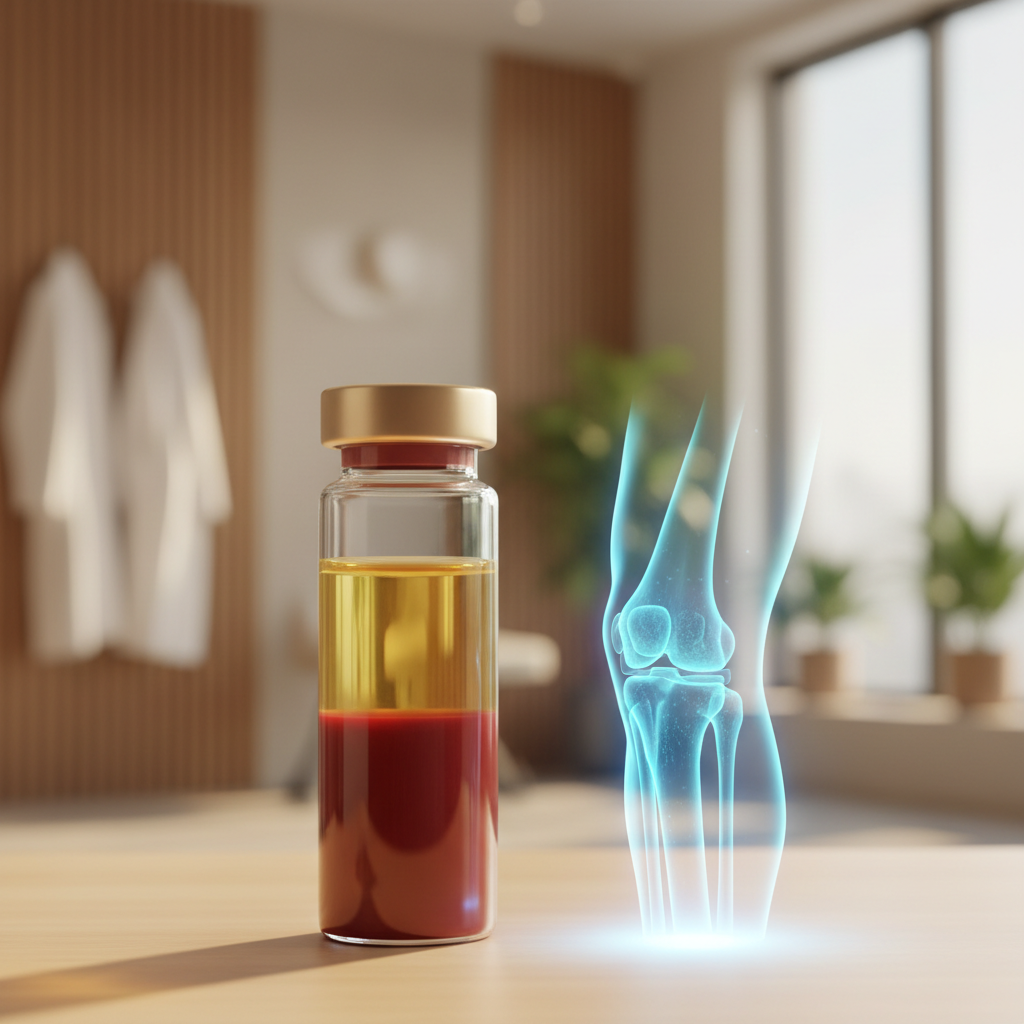
Living with joint discomfort can be a frustrating and often disheartening experience. It can change the way you move, the activities you enjoy, and your overall sense of vitality. If you're exploring options beyond temporary fixes, you may have heard about the field of regenerative medicine and treatments like Platelet-Rich Plasma, or PRP. It’s a field that is shifting the focus from masking symptoms to supporting the body’s own sophisticated systems for repair and renewal.
You are right to be curious and to seek out information on these innovative approaches. Understanding what PRP is, how it works, and what the process involves is the first step in making an informed decision about your health. It represents a hopeful and proactive approach to wellness, grounded in the remarkable potential that lies within your own body.
So, What Exactly Is Platelet-Rich Plasma?
To understand PRP, it helps to first understand the basic components of your blood. Most people know about red and white blood cells, but floating alongside them in a liquid base called plasma are tiny cellular fragments called platelets. For a long time, platelets were known primarily for their role in clotting blood to stop bleeding.
However, we now know they do much more. Platelets are like the body's first responders to an injury. When a tissue is damaged, platelets rush to the scene, not only to control bleeding but also to release a host of powerful proteins called growth factors. These growth factors are critical signaling molecules that orchestrate the healing process, attracting stem cells and instructing the body to begin building new, healthy tissue.
Platelet-Rich Plasma (PRP) is exactly what its name suggests: a concentration of your own platelets suspended in your own plasma. Through a simple and safe process, a small sample of your blood is spun in a centrifuge to separate its components. The process isolates and concentrates the platelets, creating a final product that can be 5 to 10 times richer in growth factors than normal blood.
The Science Simplified: How Does PRP Support Healing?
The core principle of PRP therapy is beautifully straightforward: deliver a high concentration of growth factors directly to an area where the body needs extra support. When PRP is introduced to a joint or soft tissue, it essentially concentrates the body’s natural repair signals right at the source of discomfort.
Think of it this way: a standard healing response is like a small, local construction crew doing its best to patch up a problem. PRP therapy is like calling in a large, highly specialized team of project managers, engineers, and supply coordinators (the growth factors) to organize and amplify the repair process. These signals can help stimulate the surrounding cells, modulate inflammation, and support the regeneration of tissue.
This is why PRP is considered a regenerative treatment. It doesn’t introduce any foreign substances. Instead, it’s designed to enhance the healing environment and provide your tissues with the building blocks they need to repair themselves, potentially leading to improved function and a reduction in discomfort for many patients.
The PRP Process: A Step-by-Step Look
One of the most reassuring aspects of PRP therapy is how straightforward the process is. It typically takes place in a single office visit and involves a few key steps.
Your Personalized Consultation
First and foremost, the journey begins with a thorough evaluation. At New You Wellness Center, our providers in Katy and Tomball, serving the greater Houston area, take the time to understand your health history, specific concerns, and wellness goals. This consultation is crucial to determine if PRP is a suitable option for you.
The Treatment Steps
- A Simple Blood Draw: The process starts with drawing a small amount of blood from your arm, similar to a routine lab test.
- Centrifugation: The vial of blood is placed in a special machine called a centrifuge, which spins at high speed. This spinning action separates your blood into distinct layers: red blood cells, plasma, and the platelet-rich layer.
- Preparation: Your provider carefully extracts the platelet-rich plasma, preparing it for the treatment.
- Application: The PRP is then precisely introduced to the targeted joint or tissue.
Most patients can return to their normal activities shortly after the procedure, with specific post-care instructions from their provider to support the best possible outcome.
Who Is a Potential Candidate for PRP?
While PRP has a wide range of applications, it’s not a one-size-fits-all solution. A good provider will help you understand if it aligns with your specific needs. Generally, individuals who find success with PRP therapy are those who:
- Are dealing with certain kinds of joint pain or soft-tissue injuries.
- Are seeking minimally invasive, non-surgical options.
- Prefer to use the body's own biology to promote healing.
- Have been evaluated and are considered appropriate candidates by a medical provider.
Individual results always vary, and the right treatment plan is deeply personal. A comprehensive assessment is the only way to know for sure if PRP is a good fit for your body and your goals.
This approach is about more than just addressing a single point of pain; it’s about investing in your body's long-term health and function. By harnessing the power of your own platelets, you are taking a proactive step towards sustained wellness and vitality.
Taking charge of your health journey begins with gathering knowledge and seeking a trusted partner in your care. Understanding the potential of regenerative therapies like PRP is a powerful move toward a future with more movement, comfort, and freedom.
Patient FAQ
Is PRP therapy painful?
Patients may experience some mild to moderate discomfort at the injection site. However, our providers at New You Wellness Center take steps to maximize your comfort, often using a local anesthetic. Some post-treatment soreness is normal and is a sign that the healing process has been initiated.
How many PRP treatments will I need?
The number of treatments varies depending on the individual, the area being treated, and the specific condition. Some patients achieve significant improvement with a single treatment, while others may benefit from a series of 2-3 treatments. This will be determined during your personal consultation.
How long does it take to see results from PRP?
Because PRP therapy works by supporting your body's natural healing cascade, results are not immediate. Most patients begin to notice improvement within 4 to 6 weeks, with continued improvement over the following months. Individual results vary.
Is PRP safe?
PRP is generally considered a very safe treatment because it uses your own blood, which virtually eliminates the risk of allergic reaction or disease transmission. The main risks are related to the injection itself, such as temporary pain, swelling, or bruising at the injection site.